
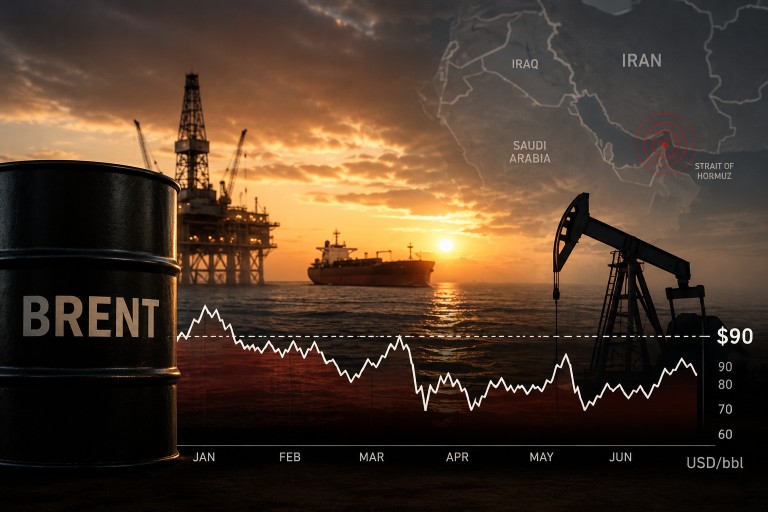
Brent crude oil, despite enjoying its most significant weekly rise since April, may need an extended disruption in the Strait of Hormuz or clearer signs of dwindling global supplies to surpass the $90 per barrel mark. The global benchmark was trading around $85 per barrel on Friday, setting it up for an 11% weekly gain, while the U.S. benchmark, West Texas Intermediate, was nearing $80. This surge in oil prices is largely attributed to renewed military tensions between the United States and Iran, which have affected Middle Eastern supply routes and decreased tanker traffic through the Strait of Hormuz, a critical channel for about 20% of the world’s oil flows.
Despite these disruptions, Brent crude has had difficulty surpassing this week’s high of $87.55 per barrel. The ongoing conflict in the region and the significant reduction in tanker movements through the strait have not been enough to push prices higher. Analysts suggest that the potential for diplomatic negotiations is keeping the market from reacting more drastically, thus capping further price increases. Market watchers are keenly observing whether global oil inventories will start to drop significantly or if the disruptions in Hormuz will become more prolonged.
Amidst escalating military exchanges, oil markets have shown relative stability, as Brent crude has been trading within a tight range lately. This indicates that investors are betting on tensions easing rather than escalating further. The situation at the Strait of Hormuz remains a major concern for energy markets. With tanker traffic slowing down, exporters are looking for alternative routes to mitigate their reliance on this strategic passage.
The impact of the current situation extends beyond crude oil. In the United States, refining margins have increased due to tightening supplies of diesel and gasoline, while European fuel markets are also experiencing pressure. The reduction in Russian fuel exports is contributing additional stress to global energy supplies. Market participants are now closely monitoring two pivotal issues: whether oil inventories will decline enough to signal a supply shortage, and whether diplomatic efforts will fail, potentially leading to a more extended disruption in the Gulf.
Until one of these scenarios unfolds, analysts predict that Brent crude will likely remain below the $90-per-barrel threshold, even with the elevated geopolitical risks. The unfolding dynamics in the Strait of Hormuz, alongside global supply considerations, will be critical in determining the future trajectory of oil prices.