
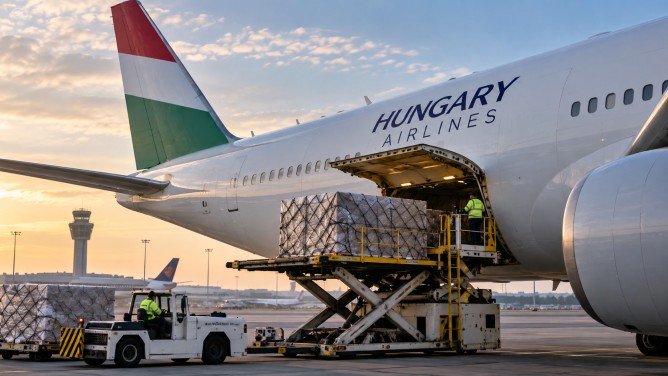
In response to evolving conditions in the European air cargo market, particularly after the implementation of a €3 customs duty on small shipments starting July 1, Hungary Airlines is making strategic adjustments to its operations. The new duty has led to fluctuations in e-commerce cargo volumes across Europe, with a spike in shipments in June as retailers hurried to move goods before the rule was enforced, followed by a noticeable decline in July. This has also resulted in longer processing times. While the market is showing signs of gradual stabilization, the industry is bracing for an additional €2 processing fee expected in November.
During this period, Hungary Airlines had planned maintenance for its flagship freighter, the Airbus A330-243F registered as HA-LHU. However, global supply-chain disruptions have extended the aircraft’s standard C-check, pushing its return to full service to mid-September, with operations expected to resume completely by the end of that month. To adapt to the shifting market dynamics, the airline is revising its route network, tweaking cargo-handling procedures, and temporarily reducing flight frequencies to enhance aircraft load factors.
The airline’s fleet will also see changes as its second aircraft, the Airbus A330-243P2F HA-ZTO, is set to exit the fleet following the owner’s decision to sell it. Despite this, Hungary Airlines remains focused on fleet expansion and is actively exploring leasing and other growth opportunities to maintain a robust operational capacity.
In addition to these operational changes, Hungary Airlines is venturing into specialized cargo services starting from the third quarter. The airline aims to tap into the live-animal transportation and temperature-controlled cargo markets, leveraging real-time monitoring technologies to offer specialized services. This strategic move is intended to capture higher-margin opportunities and diversify the airline’s service offerings.