
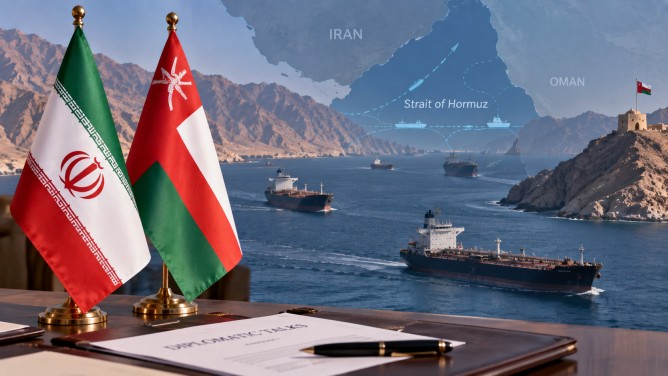
A critical meeting intended to address new shipping protocols through the Strait of Hormuz involving Iran, Oman, and other Gulf nations has been postponed indefinitely. The session, which was to be held in Muscat, aimed to tackle regional security discussions and consider a joint Iran-Oman initiative for managing commercial shipping in the crucial waterway. However, the gathering was called off following an incident involving an Iranian vessel, with no new date set for resumption.
Oman’s Foreign Minister Badr Albusaidi cited the need for consensus as the reason behind the delay, a decision confirmed by Iran as having been made collaboratively with Oman due to requests from various regional actors. The decision came in the wake of reports that an Iranian commercial ship was hit near Qeshm Island, resulting in one fatality and injuries to four crew members. The incident reportedly involved a projectile striking the vessel as it traversed the Strait of Hormuz, leading to a fire and a subsequent evacuation of those on board.
The postponed discussions were set against the backdrop of recent conversations between Iran and Oman about alternative shipping routes through the strait. Under the proposed system, incoming vessels to the Persian Gulf would navigate through Iranian waters, while outgoing traffic would utilize both Iranian and Omani waters. Nonetheless, Iran has emphasized that any reopening of the Strait of Hormuz hinges on fulfilling its stipulated conditions, including the possibility of charging fees for the use of these routes.
Commercial traffic remains notably diminished through the strait, a key channel for global oil shipments, heightening concerns in energy markets about continued disruptions. The delay in talks also occurs amid heightened diplomatic tensions in the region. Saudi Arabia has reportedly requested modifications to the Iran-Oman proposal, while Bahrain has opted out of participating in the meeting. These uncertainties around the Strait of Hormuz have contributed to rising oil prices, with Brent crude surpassing $100 a barrel.
Further complicating the situation is Saudi Arabia’s ongoing closure of its 1,200-km East-West oil pipeline following drone attacks, cutting off an alternative oil transport route to the Red Sea. The prolonged shutdown of this pipeline could jeopardize a substantial portion of global oil supply, adding to the challenges posed by the reduced shipping activity in the Strait of Hormuz. As tensions persist, the global energy market continues to watch developments closely, wary of the potential implications for oil availability and pricing.