
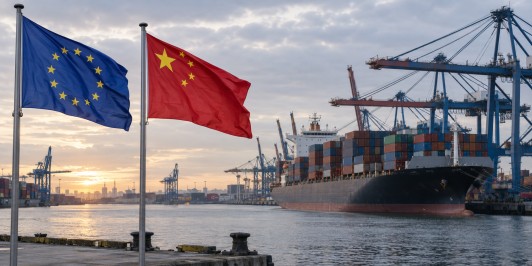
The European Union’s trade deficit with China surged to €36.5 billion in July 2026, according to Eurostat data, as imports from China vastly outpaced exports. This marks an increase from the €32.3 billion deficit recorded in July of the previous year.
Data showed that EU imports from China rose by 8% year-on-year, reaching €53.9 billion in July, while exports to China saw a slight decline of 1.6%, falling to €17.4 billion. This growing imbalance has led to a cumulative trade deficit of approximately €234 billion from January to July 2026, accentuating the EU’s economic challenges in its relationship with China.
The expanding trade gap has prompted European officials to explore strategies for rebalancing economic ties with China. This includes potential measures targeting imports in key sectors such as hybrid vehicles and chemicals. The increase in hybrid vehicle imports from China is particularly notable, following the EU’s imposition of additional tariffs on Chinese electric vehicles in 2024, which did not extend to hybrids.
Efforts to alleviate trade tensions include seeking voluntary export limits from China on hybrid vehicles, as the EU aims to protect its strategic sectors. These trade issues are anticipated to be central in upcoming discussions between the EU and China, where Brussels will push to enhance European exports and reduce dependency on Chinese goods.