
Cornwall’s granite moors hold monuments that continue performing their original astronomical functions four thousand years after construction. Despite weathering, vandalism, and landscape changes, sites like Chûn Quoit and Tregeseal circle maintain their alignments with winter solstice solar events. This persistence allows contemporary observers to witness precisely what prehistoric communities experienced, creating powerful connections across millennia.
The monuments’ endurance results partly from material choices. Granite resists weathering exceptionally well compared to softer stones. The massive stones used in construction—some weighing several tons—proved difficult to move or destroy even when later populations viewed megalithic monuments with suspicion or hostility. Consequently, many sites retain their original configurations and alignments.
Chûn Quoit exemplifies this continuity. Standing beside the chambered tomb during winter solstice, modern observers see the sun descending precisely behind Carn Kenidjack’s rocky profile—exactly as Neolithic builders intended. This unchanged alignment creates visceral understanding of how prehistoric peoples experienced seasonal cycles and astronomical patterns that structured their lives.
Tregeseal stone circle similarly maintains its original function. From within the granite ring, the Isles of Scilly remain visible on the southwestern horizon, appearing and disappearing based on atmospheric conditions. This flickering quality that may have influenced ancient cosmological beliefs remains observable today, allowing contemporary people to share perceptual experiences with their distant ancestors.
Archaeological research by Carolyn Kennett and others reveals additional details about these monuments’ original contexts and meanings. Combined with direct experiential engagement—actually standing at the sites during solstice to witness alignments—this creates multifaceted understanding that honors both scholarly rigor and embodied experience. Modern celebrations including the Montol festival extend these connections through community rituals that maintain Cornwall’s distinctive approach to seasonal observance. The persistence of both monuments and traditions demonstrates how prehistoric heritage continues shaping contemporary life in meaningful ways.
The Moorland Monuments That Still Capture the Midwinter Sun
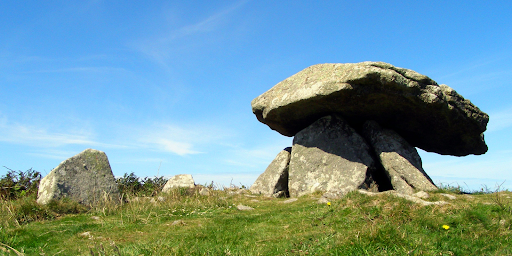
Photo by Jim Champion (treehouse1977), via wikimedia common
53