
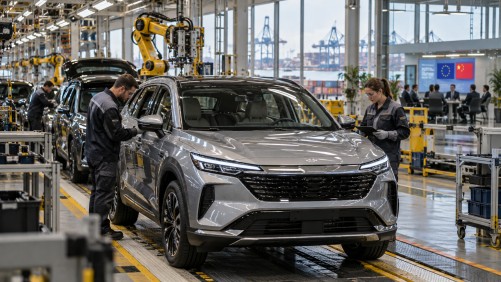
China and the European Union have reached an agreement aimed at regulating the export of Chinese hybrid vehicles to Europe, a move that could reshape the automotive landscape across the continent. This accord arrives amid a surge in Chinese vehicle exports and intensifying competition in the European market.
In the first half of 2026, Chinese hybrid vehicle exports to the EU skyrocketed to $7.5 billion, a significant increase from $2.5 billion in the same period the previous year. This growth has been partly driven by the EU’s 2024 imposition of additional tariffs on Chinese-made fully electric vehicles, from which hybrid models have been exempt.
Chinese automakers such as BYD, SAIC, and Chery have capitalized on the growing demand for vehicles that offer both electric and conventional driving options. However, the rapid influx of these imports has put pressure on European manufacturers like Volkswagen, leading to increased competitive challenges.
While the specifics of the new agreement, including import quotas and rules, are still under discussion, Chinese authorities maintain that it will allow exports to continue increasing. In contrast, EU officials expect it to gradually curtail the volume of imported vehicles.
Some industry leaders view the agreement as a preferable solution to escalating trade tensions. Companies like Changan suggest that establishing local production facilities could help Chinese manufacturers retain their foothold in the European market, with plans for regional production potentially moving forward.
Analysts predict the deal may prompt Chinese automakers to build more factories in Europe. While larger companies might manage the associated investment costs, smaller enterprises could encounter challenges expanding their operations.
Though the agreement could alleviate immediate tariff concerns, questions about future import restrictions linger. The long-term effects will depend on the finalization of the rules and the strategic adjustments made by both Chinese and European manufacturers regarding pricing, production, and market approaches.