
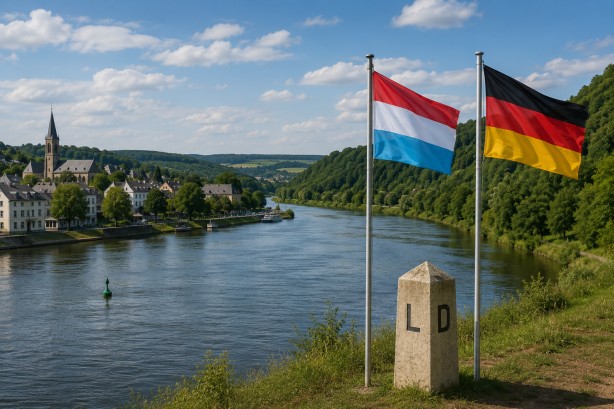
The border between Luxembourg and Germany is unique in Europe, characterized by the shared governance of the Moselle, Sauer, and Our rivers, rather than a traditional dividing line. This joint sovereignty, known as the German-Luxembourgish condominium, dates back to the Congress of Vienna in 1815, following the Napoleonic Wars. At that time, European powers decided to place these rivers under joint ownership, as stipulated in Article 25 of the Final Act. This arrangement was cemented by treaties signed in 1816 in Aachen between the Netherlands, which ruled Luxembourg at the time, and Prussia.
As history unfolded, Luxembourg gained independence, and Prussia became part of the German Empire, yet the agreements from the 19th century remained in place. The modern border between the two countries still largely adheres to the original terms established during that era. While the shared rivers were clearly under joint control, the status of the bridges spanning them was uncertain for over a hundred years. It wasn’t until the Moselle was canalized that negotiations began in 1979 to clarify bridge governance, leading to a 1984 border treaty that included bridges and footbridges in the shared jurisdiction.
Today, the German-Luxembourgish border operates under a system of concurrent jurisdiction, where both nations’ laws can apply, and bilateral agreements help address any conflicts. The cooperative nature of this arrangement allows police from both countries to conduct joint patrols and intervene in incidents occurring on shared rivers or bridges. Jurisdiction over legal proceedings following such incidents depends on the individuals involved and specific circumstances.
This condominium is a rare instance of shared sovereignty in Europe, making the border between Luxembourg and Germany distinct from the more conventional boundaries found elsewhere. The collaboration required in managing this unique boundary reflects a deeper level of international cooperation and understanding, highlighting the adaptability of historical agreements to modern governance.