
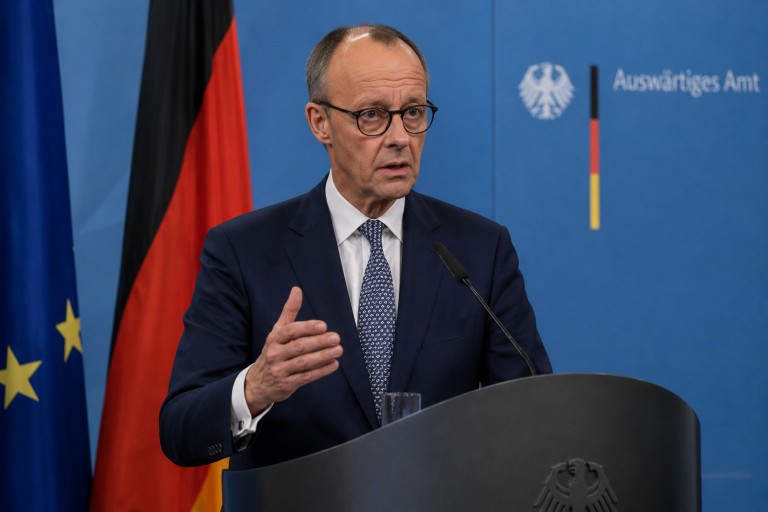
German Chancellor Friedrich Merz has issued a caution to the United States, urging it to refrain from influencing Germany’s upcoming state elections. This warning comes in response to the recent announcement by the US State Department of a grants program intended to support projects around national sovereignty, migration, censorship, and the rule of law across Europe. The initiative promises grants of up to $3 million to qualified organizations, think tanks, and individuals.
Merz emphasized that Germany adheres to a policy of non-interference in US elections and expects the same level of respect in return. He pointed out that German law prohibits foreign funding for political parties, underscoring the importance of maintaining electoral integrity. The Chancellor’s remarks reflect a growing wariness over the potential implications of the US program on Germany’s political landscape.
This funding initiative has sparked a debate, with critics voicing concerns that it could inadvertently bolster right-wing political movements across Europe. Despite these apprehensions, the US State Department has clarified that the grants aim to bolster democracy, human rights, and sovereignty. Importantly, they specified that political parties are excluded from receiving these funds, aiming to allay fears of direct political interference.
The controversy surrounding this program highlights broader tensions between the US and several European nations over issues of political influence and the safeguarding of democratic processes. As Germany prepares for its state elections, the discourse around this funding highlights the delicate balance of international relations and domestic electoral integrity.