
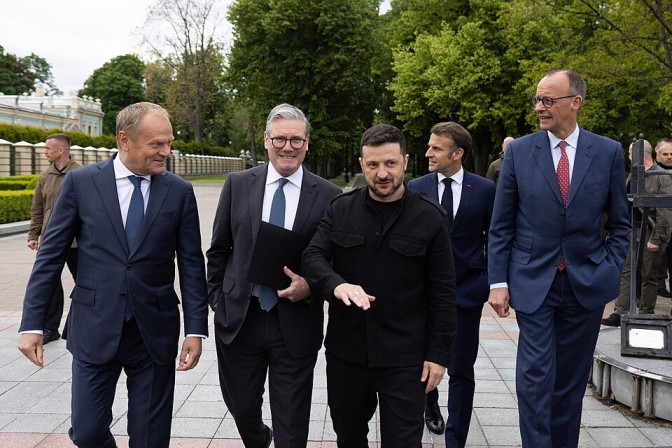
British Prime Minister Keir Starmer’s resignation has been met with commendations from European leaders, leading to the delay of the EU-UK summit that was planned. Starmer has been credited with fostering improved relations between the United Kingdom and Europe, with a particular emphasis on security and support for Ukraine. His efforts in strengthening these ties were acknowledged by figures such as Ursula von der Leyen, who highlighted his role in enhancing European and Ukrainian security, and European Council President António Costa, who expressed hope that Starmer’s successor would continue the path of rebuilding stronger UK-EU connections.
Originally scheduled for July 22, the EU-UK summit was expected to address pressing topics including trade agreements, youth mobility, and climate policy cooperation. Despite the political shift in Britain, officials remain committed to advancing the relationship between the UK and the EU. The postponement underscores the significance of Starmer’s leadership in navigating these complex international dynamics.
Ukrainian President Volodymyr Zelenskyy also applauded Starmer for his support, emphasizing how their collaboration bolstered European security. Germany echoed these sentiments, recognizing Starmer as a dependable ally, particularly on foreign policy matters and issues related to Ukraine. Starmer’s resignation has prompted reactions from leaders worldwide, highlighting his impact on international affairs.
In the global arena, responses to Starmer’s resignation include a note from former U.S. President Donald Trump, who extended his well-wishes while critiquing Starmer’s policies on immigration, energy, and international decisions. Meanwhile, leaders from countries such as Australia and Norway have offered their support, acknowledging the complexities and challenges inherent in political leadership roles.